






If a tooth has been aching for days, throbbing at night or flaring when you sip something hot, you may be wondering whether it needs a root canal. Pain that lingers, swelling near the gum and pain when you bite are among the most common warning signs of an infected dental pulp, the soft tissue inside the tooth. This guide explains how to recognise those signs, which symptoms can look like something else, and why an early assessment matters. It is written for anyone in Sydney NSW who is searching for root canal in Sydney information because a tooth has started to worry them.
Key Takeaways
Pain that lingers after hot or cold, throbs without a trigger, or sharpens when you bite are common signs the pulp inside a tooth may be inflamed or infected.
A swelling or pimple-like bump on the gum, a tooth that darkens, or a bad taste in the mouth are also worth having checked.
Pulp infection does not always hurt, so a quiet tooth is not proof that nothing is wrong.
Only a dentist can tell you whether a root canal is needed, and earlier assessment generally gives you more options.
Root canal Sydney: what is actually happening inside the tooth?
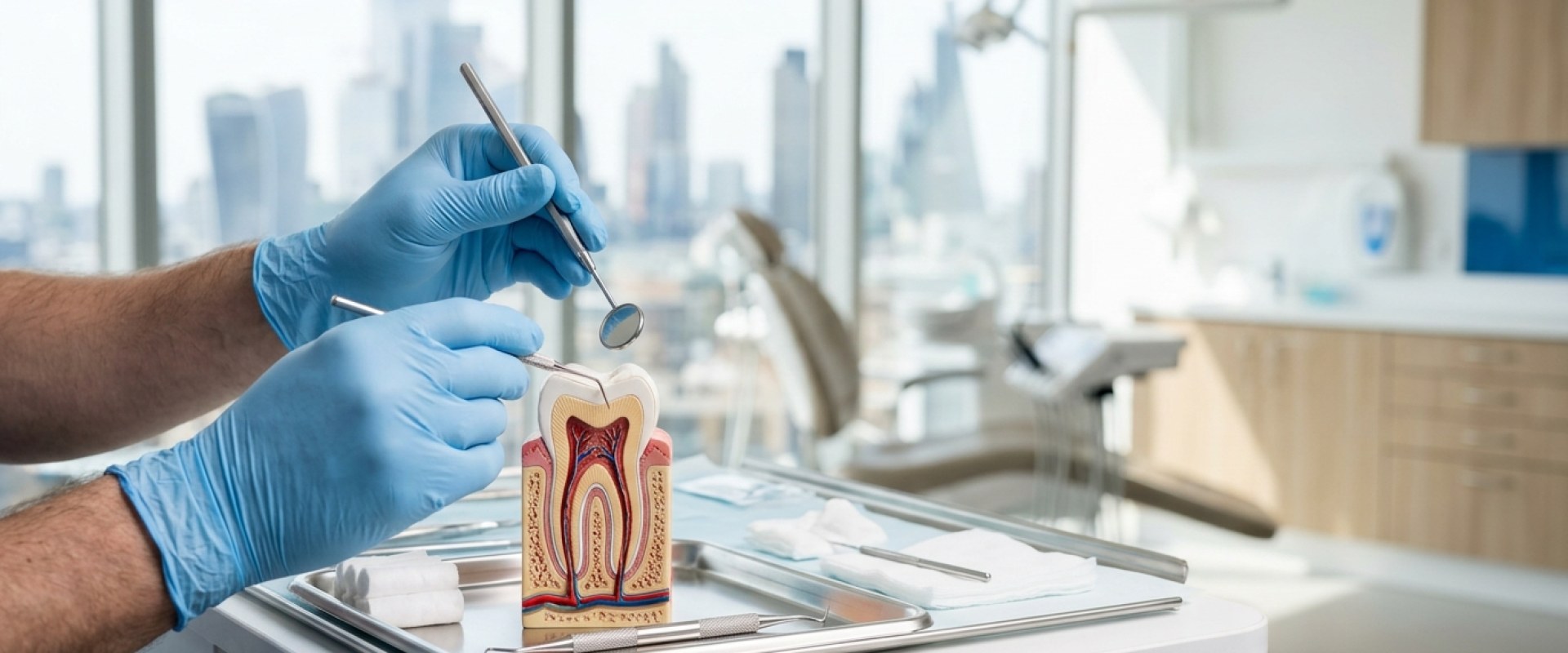
Prudential Dental Clinic’s Sydney CBD clinic is at Level 4, 404/84 Pitt St, Sydney NSW 2000, and root canal therapy is one of the services we offer there. Before looking at symptoms, it helps to understand what the dentist is concerned about. Every tooth has a hard outer layer of enamel, a softer layer beneath called dentine, and a centre known as the pulp. The pulp holds the tooth’s nerves and blood vessels, and it sits in narrow channels, the root canals, that run down into the jaw.
When decay, a deep crack, a leaking filling or an injury lets bacteria reach the pulp, the tissue can become inflamed and then infected. The pulp is enclosed in hard tooth structure, so there is very little room for swelling. That is why pulp problems often cause pain that feels out of proportion to what you can see in the mirror. A root canal procedure is the treatment dentists use to deal with that infected tissue, so the tooth can often be kept rather than removed.
Not every sore tooth has a pulp infection. A small cavity, a gum problem or a cracked filling can all cause discomfort, and the treatment for each is different. The warning signs below are a guide for deciding when to seek an assessment, not a way to diagnose yourself.
The warning signs of dental pulp infection
Pulp problems usually announce themselves in a handful of recognisable ways. You might notice one, or several together.
Pain that lingers after hot or cold
Many healthy teeth twinge briefly when you drink something icy. The sign to take seriously is sensitivity that hangs around for a long time after the drink is gone. Lingering pain suggests the nerve inside the tooth is reacting, not just the surface.
Throbbing or aching without an obvious trigger
A deep, throbbing ache that starts by itself, builds at night or wakes you from sleep is another common sign. Pain you can’t pinpoint, and that seems to spread towards the ear, jaw or temple, is also typical of problems deep in a tooth.
Pain when you bite or press
If chewing, or even light tapping on one tooth, is painful, the infection may have reached the tissue around the tip of the root. Many people find themselves avoiding that side of the mouth without quite deciding to.
Swelling, tenderness or a bump on the gum
Puffiness in the gum near the sore tooth, tenderness when you press it, or a small pimple-like bump can mean infection is looking for a way out. The bump may come and go. If it seems to settle, that does not mean the cause has gone; it often means the infection has found a drainage route.
A darkening tooth, a bad taste or a bad smell
A tooth that gradually turns grey or darker than its neighbours can indicate the pulp inside is damaged. A persistent unpleasant taste or smell in the mouth may be linked to infection draining. Neither sign is a diagnosis on its own, but each is a good reason to book a check.
No symptoms at all
This one surprises people. Once the nerve has died, a tooth can stop hurting while the infection remains. That is one reason routine check-ups matter: a dentist can spot changes that you would not feel. If you are due for a check, our guide to your first dental visit in Sydney CBD explains what to expect.
Talk to our Sydney CBD team about a painful tooth
If any of these signs sound familiar, we would be glad to help you work out what is going on. Hours and availability can change, so it is worth confirming when you call. Whether you are working nearby or live elsewhere in Sydney, tell the team what you have noticed and they can advise on the next step.Call +61292337515
A tooth that has stopped hurting has not necessarily healed.
When tooth pain is not the tooth: look-alike symptoms
Pain in the upper back teeth can come from somewhere other than the tooth. The roots of those teeth sit close to the sinuses, so a blocked or inflamed sinus can create an ache that feels dental. Our article on how sinus congestion can mimic tooth pain looks at this in more detail.
A few clues may help you tell the difference, although only an examination can settle it:
Sinus-related aching often affects several upper teeth at once and tends to come with a blocked nose, facial pressure or a recent cold.
Pain from a pulp problem more often centres on one tooth, and that tooth usually reacts to temperature or to biting.
Gum disease, a cracked tooth, grinding and jaw joint problems can all produce soreness too.
Because so many conditions overlap, it is hard to say from the symptoms alone whether you need root canal treatment. A dentist can examine the tooth, test how it responds and, where appropriate, take X-rays to see what is happening around the root. That assessment is the only reliable way to decide, and it keeps you from treating the wrong problem.
Why early assessment makes a difference
It is tempting to wait and see, especially if the pain eases with over-the-counter relief or comes and goes. The trouble is that an infected pulp does not usually clear up by itself. Bacteria can continue to spread beyond the root tip into the surrounding bone and soft tissue, which can lead to an abscess, a collection of pus that causes swelling and more intense pain.
Seeing a dentist early generally means:
More options for the tooth. Treating the problem before it has spread gives the dentist more to work with when it comes to saving the natural tooth.
A simpler path. Early problems can often be managed with less complex treatment than ones that have been left for months.
Less disruption. Pain that builds at its own pace rarely arrives at a convenient time, such as in the middle of a work week or before travel.
We can’t promise a particular outcome for any tooth, and the right treatment depends on the individual case. What we can say is that a tooth looked at sooner is rarely worse off than one looked at later. If you want background on the treatment itself, our article on the essentials of root canal treatment walks through the basics.
When a sore tooth becomes urgent
Some symptoms call for prompt attention rather than a routine appointment. Swelling in the face or jaw, severe pain that you cannot manage, or pain with a fever are reasons to seek care quickly. If swelling is spreading, or you have trouble swallowing or breathing, go to a hospital emergency department or call 000 immediately.
For urgent dental pain, Emergency Dentistry is one of the services offered at the Sydney CBD clinic, and our page on immediate care for dental pain in Sydney CBD explains how to get in touch. Appointment availability depends on the day, so call the clinic to find out what can be arranged rather than assuming a same-day time will be free.
What to expect from a root canal assessment
If you book in, the dentist will usually start by asking about your symptoms: when the pain began, what triggers it, and whether you have noticed swelling or a bump. They will then examine the tooth and surrounding gum, may test how the tooth responds to temperature or pressure, and may recommend an X-ray. From there, they can explain what they have found and what the treatment options are for that tooth.
If a root canal is recommended, the aim of the root canal procedure is to remove the infected pulp, clean the inside of the canals and seal the space so bacteria cannot return. The tooth will often need a suitable restoration afterwards to protect it. The number of visits, the materials used and any additional treatment depend on the tooth and the extent of the problem, which is also why the cost varies from one person to the next. The clinic can give you a current quote after assessment, and it is better to ask the team directly than to rely on figures you find online.
If you have private health cover, check your policy with your fund before treatment. Benefits and rebates vary and are best confirmed with the fund and the clinic at the time.
Frequently Asked Questions
How do I know if I need a root canal?
You can’t be certain without an examination. Lingering pain after hot or cold, throbbing without a trigger, pain on biting, gum swelling and a darkening tooth are all reasons to have the tooth assessed. The dentist will work out the cause and whether root canal treatment is appropriate.
Can a tooth be infected without hurting?
Yes. If the nerve inside has died, the pain may stop even though infection remains. A dentist may find signs of this on an X-ray or during a routine check-up, which is a good reason not to skip regular visits.
Will a toothache go away on its own?
Discomfort can ease for a while, but a pulp infection does not typically resolve without treatment. If the pain has eased and then returned, or a bump on the gum has come and gone, it is still worth having the tooth checked.
Does Prudential Dental Clinic offer root canal treatment in Sydney CBD?
Yes, Root Canal Treatment is one of the services at the Sydney CBD clinic on Pitt Street. Call (02) 9233 7515 to ask about an appointment, and confirm current opening hours when you ring.
How much does a root canal cost?
The cost depends on the tooth, how complex the treatment is, the materials used, the number of visits and whether other treatment is needed. The clinic can give you an accurate quote only after an assessment, so please contact the team for current pricing.
Acting early on a painful tooth
A tooth that aches for days, reacts for a long time to hot or cold, hurts to bite on or has a bump on the gum next to it deserves a proper look. These are the signs that most often point to trouble in the pulp, and they are easier to deal with sooner than later.
You do not need to work out the cause yourself. Describe what you have noticed, and the dentist can examine the tooth, explain what they find and talk through the options, including whether a root canal procedure is likely to help.
If you are comparing options for a dentist in Sydney CBD, it is reasonable to ask how the clinic approaches assessment and what to expect at the first visit. Asking before you book is a good way to feel comfortable about the next step.
Book a time to have your tooth looked at. Our listed hours are Monday to Tuesday and Friday, 9am to 5:30pm, so please confirm current availability when you call.Call +61292337515