






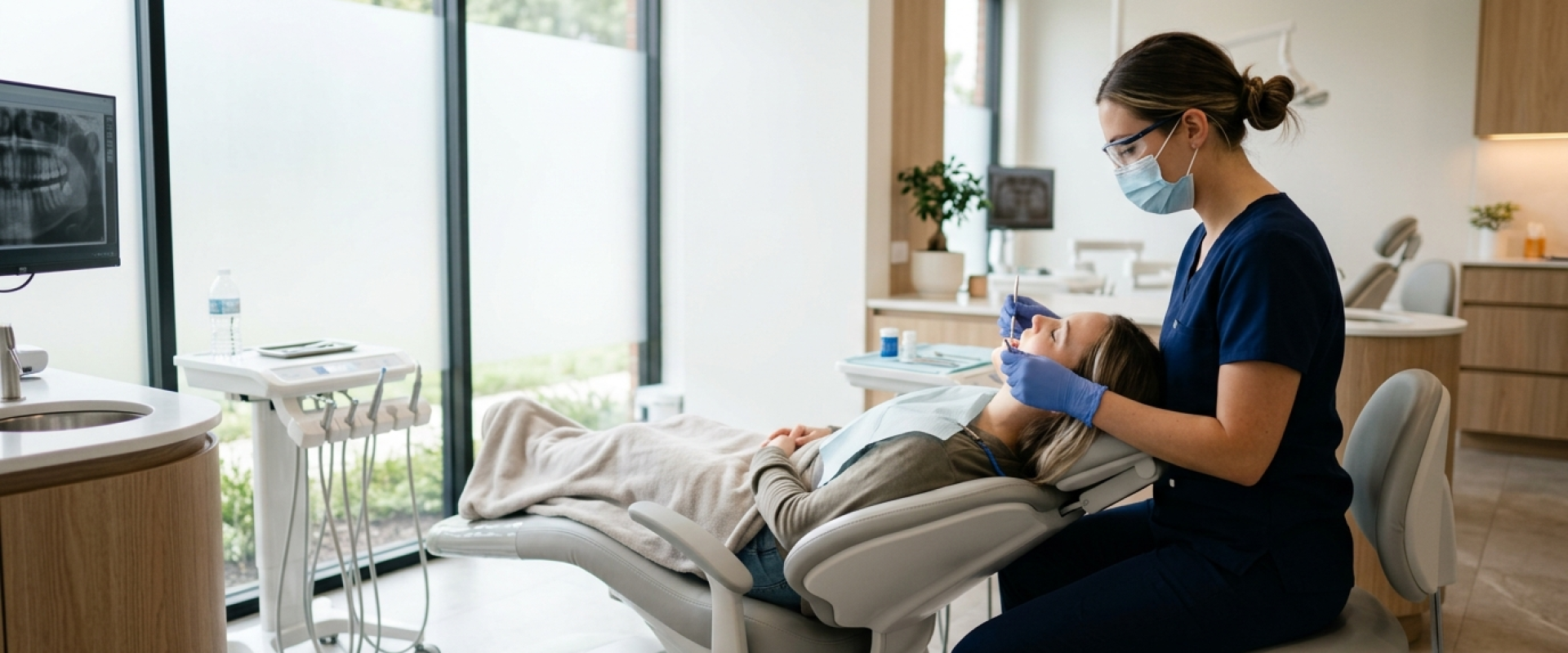
When people ask how often to get teeth cleaned, the usual answer is about every six months, and for many patients that is a sensible starting point. But it is a general guide, not a rule that fits everyone. Some mouths need a visit more often, and a few may be able to stretch the gap if their dentist agrees. At Prudential Dental Clinic, serving Sydney CBD NSW and Five Dock NSW, the right interval is decided after an examination of your teeth and gums. This guide explains how often to get teeth cleaned in your situation and what shapes that decision.
Key Takeaways
Around every six months is a common recommendation for a professional clean, but your dentist sets your actual interval after assessing your mouth.
Gum disease, a history of decay, smoking, diabetes, orthodontic appliances and heavy plaque or tartar build-up can all point towards more frequent visits.
A professional clean removes hardened deposits that brushing and flossing cannot, and it is separate from a deep clean for gum disease.
Regular visits let small problems be spotted early, when they are usually simpler to treat.
Cost depends on what your mouth needs, so ask the clinic for a quote after your assessment rather than relying on a general figure.
How often to get teeth cleaned: what decides your interval
For many adults, a check-up and teeth cleaning roughly twice a year is the usual recommendation, which works out to about every six months. That rhythm gives your dentist regular chances to look at your teeth and gums, and it stops soft plaque from hardening into tartar for long periods.
The key word is “usual”. Six months is a starting point, not a prescription. A person with healthy gums, little build-up and a good home routine may be advised differently from someone who has had gum problems or repeated cavities. Your dentist looks at your gum health, your history and how quickly deposits form on your teeth, then recommends a schedule that suits you.
If you are unsure what interval applies to you, the simplest answer is to ask at your next visit. A good question is: “Based on my mouth today, when should I come back for my next clean?” You should leave with a specific timeframe rather than a vague “see you again soon”.
What a professional clean actually does
It helps to know what you are scheduling. Plaque is a soft, sticky film of bacteria that forms on teeth every day. Brushing and flossing remove much of it, but whatever is left behind can harden into tartar (also called calculus). Once tartar has formed, it bonds to the tooth surface and cannot be brushed away at home.
A professional clean removes that hardened build-up, including from places that are easy to miss, such as along the gumline and between the teeth. Many people also notice their teeth feel smoother afterwards. Removing these deposits matters because bacteria that sit against the gums can irritate them over time.
At Prudential Dental Clinic, Dental Check-up and Hygiene is one of our general dentistry services, and it sits within our broader preventive dentistry focus. If you would like a closer look at the process, our guide to dental prophylaxis and professional teeth cleaning in Sydney walks through it step by step.
It is also worth separating a routine clean from a deep clean. A routine clean is preventive. A deep clean is a different kind of treatment that a dentist may recommend when gum disease has developed and the problem sits below the gumline. If your dentist suggests one, ask them to explain why it is needed, what it involves and how many visits to expect.
Factors that may mean you need more regular visits
Several things can make a six-monthly gap too long. None of these is a diagnosis on its own, and only a dentist can tell you whether any of them applies to you. They are, however, the kinds of questions worth raising at your appointment.
Gum disease or a history of it
If you have had gum inflammation or gum disease before, your dentist may want to monitor your gums more closely. Gum problems can return if the bacteria that caused them are not kept under control, and a shorter interval between cleans is one way of staying on top of that.
Frequent plaque or tartar build-up
Some people simply form deposits faster than others, even with careful brushing. If your dentist finds a lot of build-up each time, they may suggest returning sooner so the deposits do not have as long to accumulate.
A history of cavities or existing dental work
If you have had repeated decay, or you have fillings, crowns, bridges or implants, regular reviews help your dentist keep an eye on both the restorations and the surrounding teeth and gums. Clean margins around dental work are easier to maintain when hygiene visits happen consistently.
Braces and other orthodontic treatment
Orthodontic appliances can make thorough cleaning at home harder, because plaque can collect around brackets, wires and attachments. If you are having orthodontic treatment, ask your dentist how often you should have your teeth cleaned while it is under way.
Smoking, diabetes and other health factors
Smoking and certain medical conditions, including diabetes, can affect gum health. Some medications also reduce saliva, and saliva is one of the mouth’s natural defences. Tell your dentist about your health history and any medications you take, so they can factor it into your schedule.
Children and teenagers
Young patients have their own needs, as their teeth and jaws are still developing. Our Paediatric Dentistry service looks after children’s dental care, and the right visit schedule for a child is something to settle with the dentist after an examination.
A professional clean is not a sign that you have done something wrong at home. It is the part of dental care that brushing alone cannot do.
Book your next clean with Prudential Dental Clinic
If you cannot remember when you last had your teeth cleaned, or you would like a clear recommendation on how often you should come in, we are happy to help. Our Five Dock clinic is open Monday to Thursday, 9am to 5:30pm. If the Sydney CBD is more convenient, ask about that location when you get in touch.Call +61297136980
Can you go longer than six months between cleans?
Some patients wonder whether they can safely stretch the gap, particularly if their teeth feel fine. The honest answer is that it depends on the person. A dentist may be comfortable with a longer interval for someone whose gums are healthy, whose deposits are minimal and who has a good home routine. That is a decision made after an examination, not something to assume on your own.
One reason it is risky to judge for yourself is that early gum and tooth problems often do not hurt. Teeth can feel perfectly normal while plaque and tartar are quietly building up. Bleeding when you brush or floss, persistent bad breath, red or swollen gums and receding gums are all signs worth mentioning, and they are good reasons not to put off an appointment.
If cost or time is what makes you hesitate, say so. It is better to talk through a realistic plan with your dentist than to skip visits altogether.
Why a consistent routine matters for long-term oral health
The real value of regular teeth cleaning is consistency. A single clean after a long gap helps, but a steady rhythm does more. Each visit lets your dentist compare what they see with last time, so changes in your gums, your bite or the condition of your teeth are noticed early.
Catching problems early usually means simpler treatment. A small area of decay can often be handled with a filling, and our guide to modern approaches to dental cavity restoration explains what that can involve. Left alone, the same problem can grow and may need more extensive care, such as root canal treatment.
A consistent routine also protects the work you have already had done. Crowns, bridges, veneers and implants all depend on healthy gums and teeth around them. If you are considering cosmetic dentistry, including teeth whitening or veneers, a recent clean and check-up is a sensible starting point, because your dentist can confirm your teeth and gums are in good condition first.
Finally, regular visits build familiarity. Patients who see their dentist consistently often feel more comfortable in the chair, which makes every future appointment easier, including unplanned ones.
Cleaning, check-up and treatment: how the visits fit together
A clean is usually combined with a check-up, so you get the hygiene work and an examination in the same visit. If your dentist finds something that needs attention, they will explain it and discuss options, and treatment is usually planned separately. You are not committing to anything simply by turning up for a clean.
What affects the cost?
Many people search for the cost of a clean or a deep clean in Australia, and it is a fair question. We do not publish a price list in this article, because the right figure depends on your situation. The main factors are how much build-up there is, whether you need a routine clean or a deeper treatment for gum disease, how many visits are required, and whether an examination or other services are included. Private health cover may also affect what you pay, so check your policy with your fund. The most accurate answer comes from a dentist assessing your mouth, and the clinic can then give you a quote.
Is a first visit different?
If it is your first time with a new dentist, the appointment may include more discussion about your history. Our guide on what to expect at your first dental visit in Sydney CBD covers what to bring and what happens in the chair.
What to do if it has been years since your last clean
Plenty of people put off the dentist for a long stretch, and it is never too late to start again. There is no need to feel embarrassed. Dentists see this regularly, and what matters is getting your mouth assessed so you know where you stand.
After a long gap, your dentist may find more tartar than usual, or gums that are inflamed. They may suggest more than one visit to get things back on track, then set a regular schedule going forward. Try to book the appointment before you feel you have “fixed” things at home, because a professional assessment gives you an accurate starting point.
In the meantime, keep brushing twice a day, clean between your teeth daily and limit sugary snacks and drinks. Those habits make your next professional clean easier and more effective.
Frequently Asked Questions
How often should I have my teeth professionally cleaned?
A common recommendation is about every six months, but your dentist decides the right interval for you after examining your teeth and gums. Some people are advised to come more often, particularly if they have had gum disease or build up tartar quickly.
Does teeth cleaning hurt?
Many people find a routine clean comfortable, though sensitive teeth or inflamed gums can make it feel less pleasant. If you are anxious or have sensitive areas, tell your dentist before you begin so they can adjust their approach.
What is the difference between a routine clean and a deep clean?
A routine clean is preventive and removes plaque and tartar from the teeth, mostly above the gumline. A deep clean is a different treatment that may be recommended when gum disease is present. Your dentist can explain which, if either, applies to you.
How much does a deep cleaning of teeth cost?
It varies, because it depends on how much treatment your gums need and how many visits it takes. We do not quote general figures in this article. After an assessment, the clinic can give you a quote for your situation, and your health fund can tell you what your cover may include.
Can I skip a clean if my teeth feel fine?
It is not advisable to decide that yourself. Early gum disease and decay often cause no pain, so teeth can feel fine while problems develop. Your dentist is best placed to tell you whether a longer gap is suitable.
Do children need professional cleans too?
Children’s dental needs differ from adults’, and the right schedule depends on the child. Prudential Dental Clinic offers Paediatric Dentistry, so you can ask the dentist what visit frequency suits your child. More answers are available on our frequently asked questions page.
Keeping your smile on schedule
The question of how often to book teeth cleaning has a simple starting answer, around every six months, and a more personal one that only a dentist can give. Your gum health, your history, your habits and any dental work you have all shape it.
What matters most is turning that answer into a routine. Regular visits catch small problems early, protect existing dental work and make each appointment more familiar. Brushing and flossing at home do the daily work, and a professional clean handles what they cannot.
If you are not sure where you stand, an appointment is the quickest way to find out. Ask your dentist for a recommended interval and put the next visit in your diary before you leave.
Ready to book your next teeth clean?
Tell us when you last had a clean and we will help you find a suitable time.Call +61297136980